The Depth of the Surface
«And how do you groom your mustache, by bending over puddles?” –And I added that, on the contrary, the mirror connects the individual to the community, and its entry into the homes of the proletariat cemented class pride, that sense of decorum thrown in the face of the masters: “We are nothing, and we want to be everything! We can be, and are, more elegant than you!!»
Wu Ming, 54
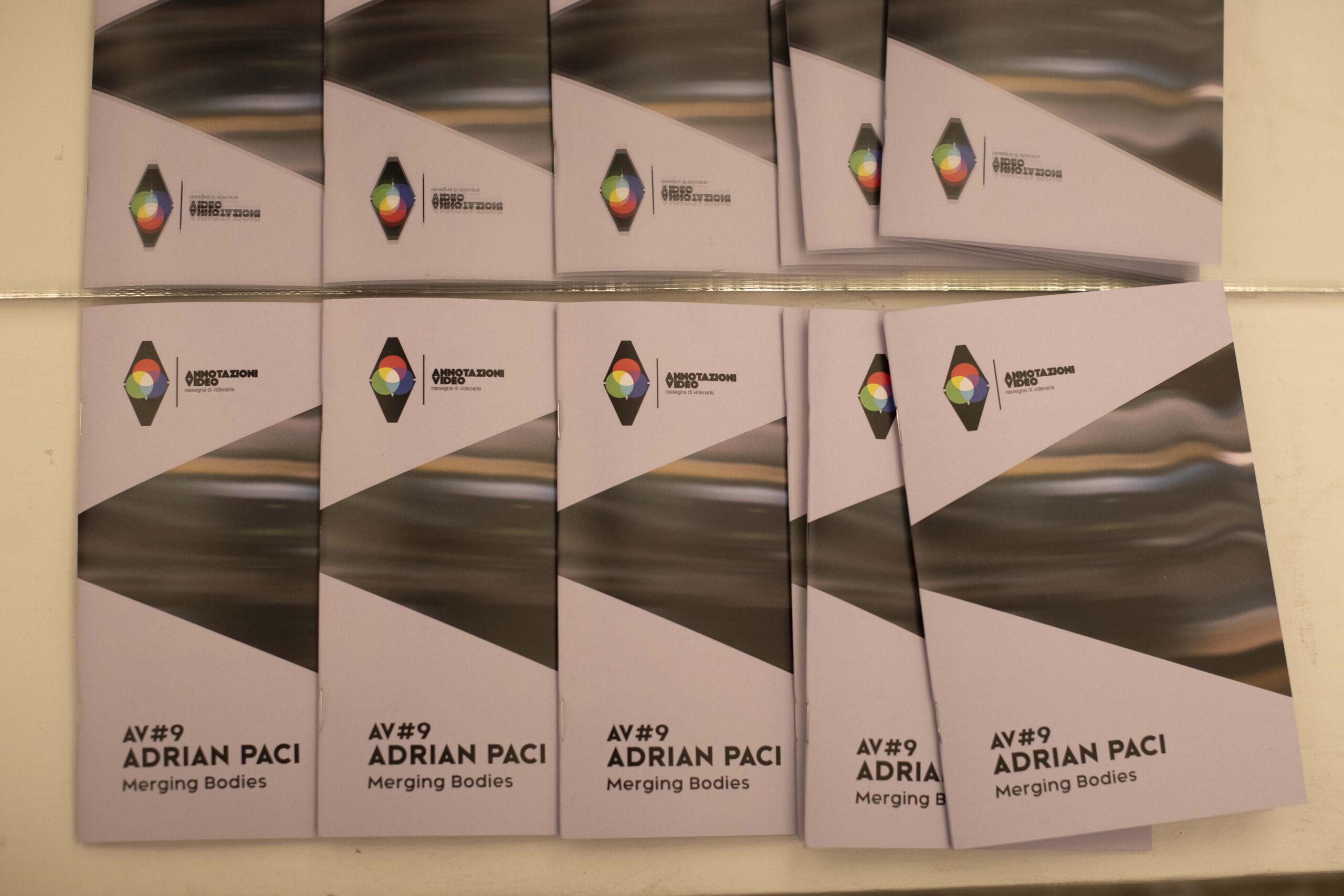
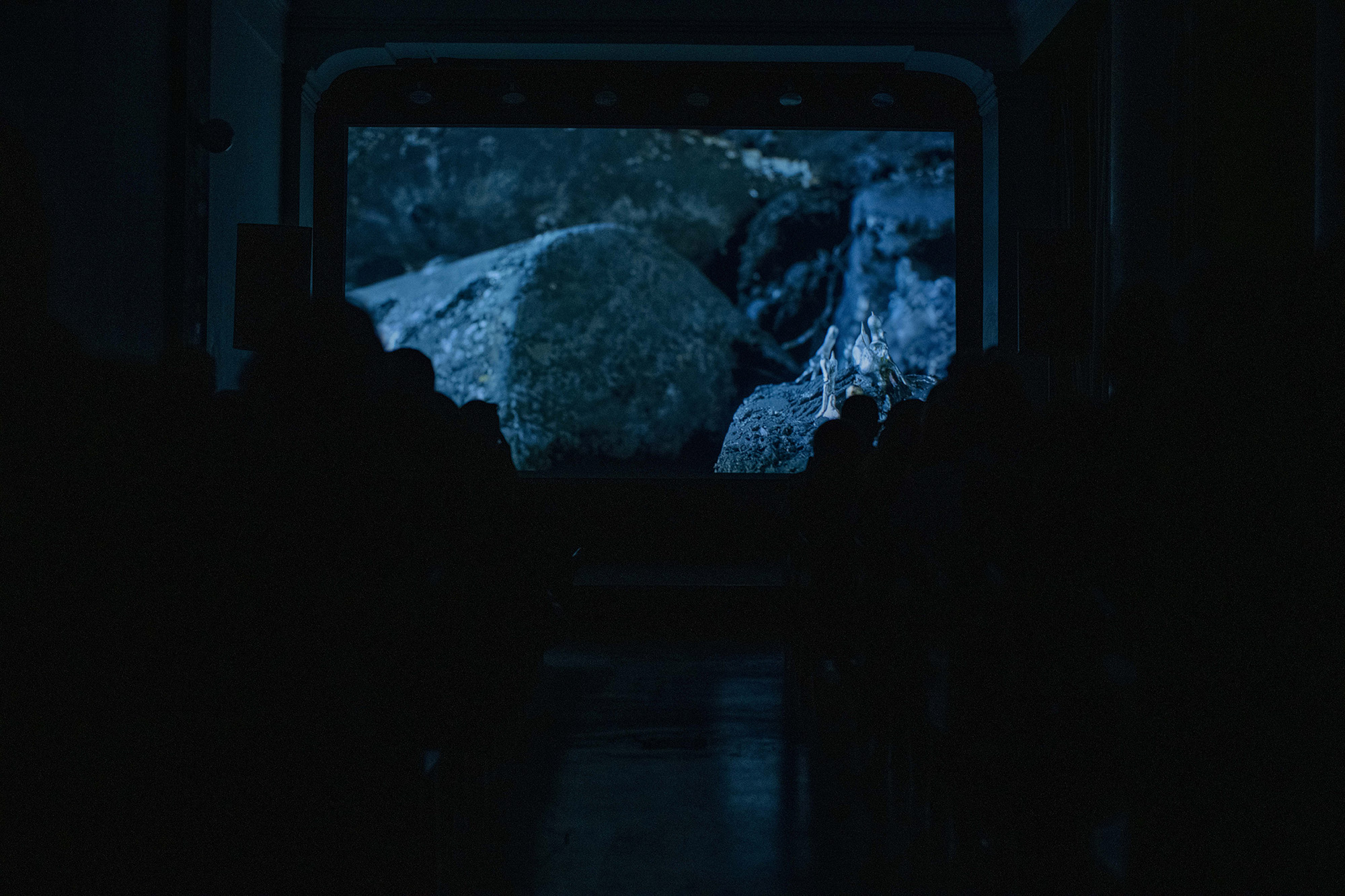
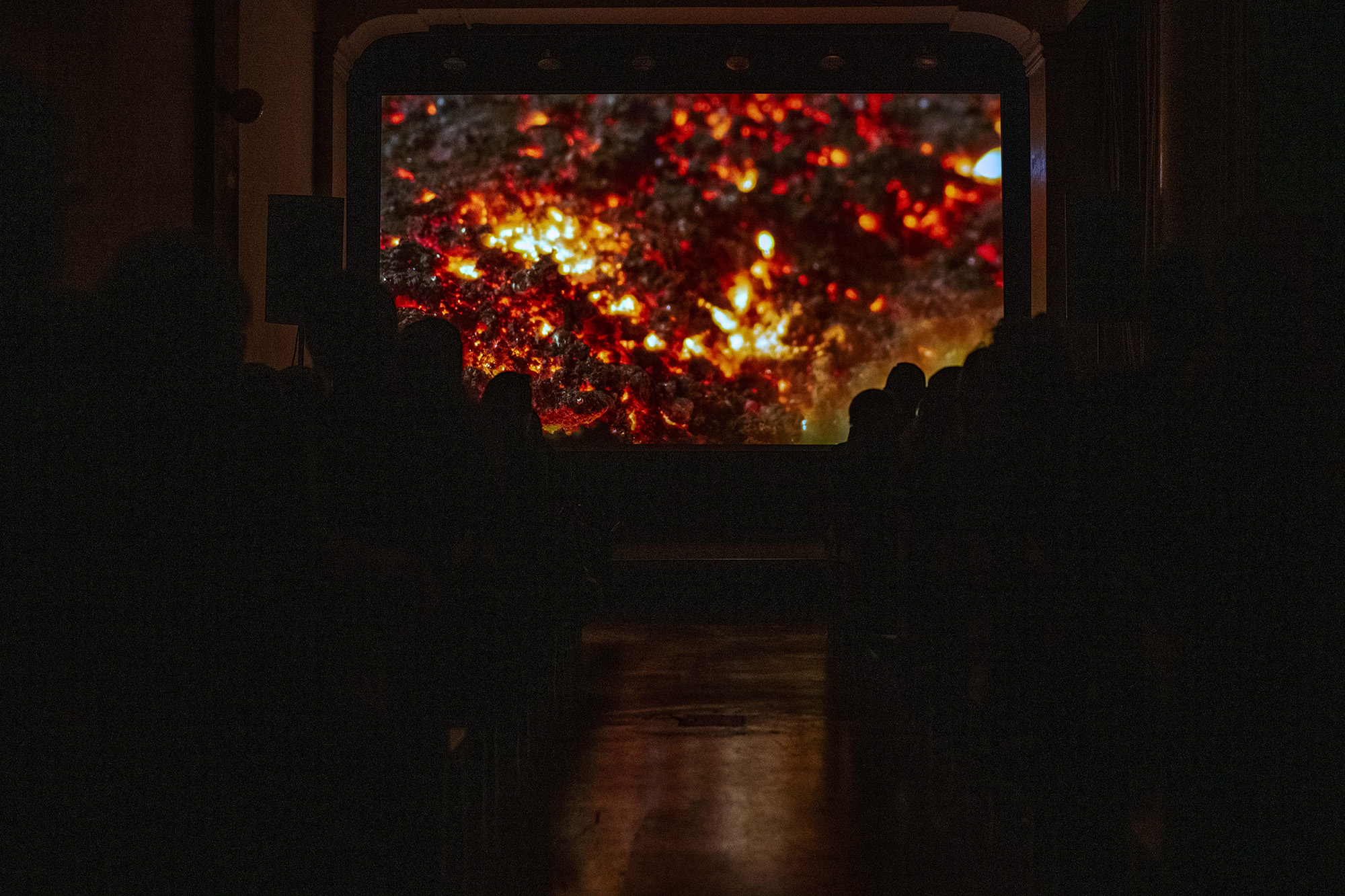
On the centenary of its activity, the Gruppo Laminazione Sottile[1] commissioned Adrian Paci to create a new artwork focused on the company and its production. After an in-depth study of the company and its internal mechanisms, the artist created the video “Merging Bodies”, whose true subject is transformation—not only the transformation of raw material into a “product” but also the transformation of labor into the “person” who performs it.
The idea of merging (to fuse, to blend) here concerns the fusion of all these elements into a new surface. A surface that is no longer just the reflective surface of the laminates but one that transports the viewer into the depth of that very surface. As if this reflective surface were capable of creating an “other” space—one in which we are not physically present but which we can inhabit through our gaze. A space that we might define as a heterotopia in the Foucauldian sense.
Thus, the physical dimension of the factory—introduced to the viewer through details, moments, and fragments of dialogue—gradually transforms into an abstract dimension, unusual and new even within Paci’s own artistic research. We are projected into an abstract, colorful world made of reflective surfaces and sound, which, in the artist’s words, “creates thickness” and at times seems to move in sync with the sinuous forms that emerge and shift across the laminates’ surfaces—like waves attempting to transmit stories, to communicate.
This central body also appears to shift Paci’s focus toward a new expressive solution, one less tied to portraiture in the classical sense and more to a narration composed of sounds and images. In this particular case, it shows how the factory and the people within it have merged into a new, abstract space-time.
This narration through forms, sounds, and colors pauses momentarily—as if to remind us where we are and where we started—to follow a visual narrative more typical of Adrian Paci’s research. The camera moves in a horizontal tracking shot through the factory. Now static, the factory is “put on display” to reconnect with the physical presence of the workers, who stand holding in their hands a sheet of laminate, a product they themselves have created.
The camera moves past the workers; like in a tableau vivant, they remain still, posed on shelves, scaffolding, and supports, each showcasing a sheet of colored laminate, displaying their craftsmanship.
But this interlude lasts only as long as the camera’s movement—like a brief opening—before we are once again projected into the reflective surface. This time, the surface functions as a filter through which we see portraits of some of the factory workers. We now catch glimpses of their expressions—some laugh, some look directly at the camera, others appear lost in thought.
The surface of the laminates once again becomes both a mirror and a space, in line with Foucault’s idea of heterotopia:
«From the perspective of the mirror, I discover my absence from the place where I am, since I see myself over there. Starting from this gaze that, so to speak, is directed at me, from the ground of this virtual space located on the other side of the glass, I return to myself.»[2]
Their faces merge with the object of their labor, only to return back to themselves—to reclaim their identity and presence. They are no longer just labor, no longer a mere reflected absence, but a physical presence, emotion, memory—in short, fallible humanity.
Stefano Romano
[1] An industrial group currently composed of ten companies integrated in a supply chain specialised in the transformation of aluminium and the production of rolled products, in different alloys, sizes, thicknesses (between 6 microns and 6 mm) and for the most diverse applications. Andrea Viliani, from the Merging Bodies catalogue, produced on the occasion of the world premiere presentation of the video at the MADRE museum in Naples.
[2] Foucault, M; (a cura di Moscati, A.) Utopie Eterotopie. Cronopio, Napoli, collana Rasoi, 2006.